How South Koreans Are Trading Equities Beyond KOSPI
Korean retail investors have never lacked appetite in their own equity markets. The KOSPI and KOSDAQ have long served as the primary vehicles for household investment, with brokerage infrastructure, financial media coverage, and familiarity with major listed companies reinforcing a strong culture of domestic equity participation. That appetite has evolved, and a growing number of Korean retail investors are looking to understand how to trade equities on exchanges outside Seoul, driven by diversification goals and a desire for exposure to faster-growing sectors abroad. The shift is not a rejection of the domestic market but an expansion of the investment frame that a more connected and financially literate generation has made possible.
The outward migration has been directed primarily toward the United States. Korea’s retail interest in US-listed tech stocks predates the recent wave of retail investors entering foreign markets, but improved foreign equity infrastructure at domestic brokerages and the deep presence of American technology brands in Korean consumer life have reduced the barriers further. US equity markets feel familiar to Korean investors who use American devices, stream content on American platforms, and work within semiconductor supply chains tied to American chip designers. That cultural proximity has made the analytical leap into US equity markets feel less foreign than the geography might suggest.
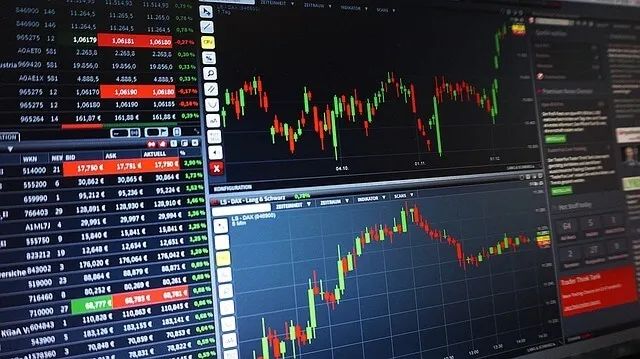
Image Source: Pixabay
Cross-border equity access has improved substantially at the mechanism level. Major Korean brokerages now offer foreign equity trading desks with Korean-language support, real-time US market data, and mobile interfaces that handle currency conversion and settlement transparently. Where managing offshore equity positions once required a separate account and considerable administrative effort, that barrier has largely been removed. Korean investors can now manage offshore positions within the same application they use for KOSPI holdings. That simplification has expanded the participant pool well beyond the earlier group who had the resources and patience to navigate foreign equity access when it was genuinely difficult, and the volume of Korean retail participation in US markets over recent years reflects how completely that infrastructure gap has closed.
CFD-based equity exposure has developed a parallel following among participants seeking to learn how to trade equities through derivative instruments, particularly those seeking leverage or short-selling access that standard foreign equity accounts do not provide. The risk profile differs meaningfully from direct equity ownership, and most Korean investors who take this route have built foundational knowledge through community education and demo trading before committing capital. The CFD equity audience is composed largely of existing forex and index traders applying a familiar framework to the single-stock market, and the transition tends to be smoother for those who already understand how leverage and margin behave under volatile conditions.
Much of the cross-border equity interest is sector-driven rather than purely financial. Korean investors with backgrounds in technology, pharmaceuticals, or advanced manufacturing tend to develop stronger industry-based views when analyzing foreign markets. An engineer working in display technology who tracks the product cycle of a US semiconductor firm brings a research advantage that pure retail participants generally do not have access to. Korean trading communities have recognized this and developed spaces for industry-specific equity analysis alongside traditional technical content, creating a richer analytical environment than would exist if participation were driven by chart reading alone.
Korean retail equity participation beyond the domestic market reflects more than a diversification strategy. It represents a generation of investors who already engage with global markets as part of their economic lives, for whom trading stocks across multiple exchanges and through varied instruments is not a specialized skill but a practical response to the interconnected economy they inhabit.

Comments