Situations Where Traders Should Reassess Their Leverage
Leverage rarely becomes dangerous because its arithmetic suddenly changes. The problem is that traders keep the same exposure while the environment around the position becomes less forgiving. In leverage trading, position size that looked reasonable during an orderly session can become excessive after volatility, liquidity, or account equity shifts.
Experienced traders reassess leverage when the assumptions behind the original sizing decision stop holding. Beginners often wait for a large loss to force the issue. By then, the conversation is no longer about choosing exposure but about managing an account already under pressure.
Volatility Expands Beyond the Recent Range
Position size is often based on a stop placed beyond a recent swing high or low. That logic weakens when daily ranges expand and ordinary price movement begins reaching levels that previously marked invalidation. Keeping the same number of contracts while widening the stop quietly increases the money at risk.
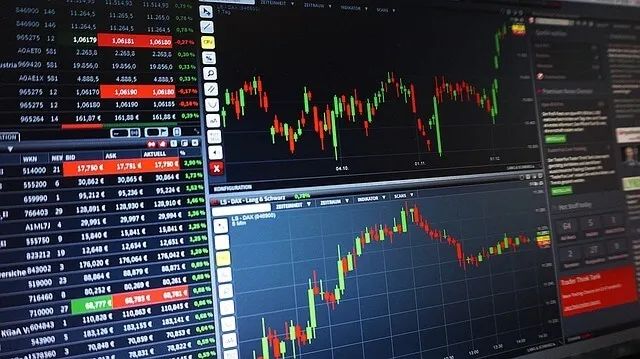
Image Source: Pixabay
A realistic example appears after a major US inflation release. An equity index may break above its morning range, attract momentum buyers, and then reverse as bond yields climb. A trader using the previous week’s narrow ranges might enter with familiar size, only to find that a routine post-release retracement is twice as large as expected. The market did not need to collapse. The position was simply calibrated for calmer conditions.
Volatility changes the meaning of “normal.”
Account Equity Has Fallen
Leverage rises automatically when account equity declines while total exposure stays unchanged. A position worth $20,000 represents four times leverage against $5,000 of equity. After losses reduce equity to $4,000, the same position produces five times exposure, even though the trader has not added a single contract.
This is where experienced traders think differently. They treat drawdown as a reason to reduce size, not as a prompt to recover losses faster. Beginners are often tempted to maintain or increase exposure because the next winning trade needs to earn more. The account then becomes most aggressive precisely when its capacity to absorb another loss is weakest.
The counterintuitive insight is that cutting leverage after a loss can improve recovery speed. Smaller exposure reduces the chance that another ordinary setback creates a deeper drawdown, which would require a disproportionately larger percentage gain to repair.
Several Positions Share the Same Risk
Five trades do not necessarily provide five separate sources of exposure. A long technology index, long semiconductor shares, short the US dollar against a growth-sensitive currency, and long copper can all benefit from the same risk-on conditions. When bond yields rise sharply or investors retreat from growth assets, those positions may weaken together.
Platforms display each order separately, which can make the portfolio appear more diversified than it is. The balance sheet sees the connection eventually. Correlations usually become more visible during stress because investors reduce several risky positions at once, while liquidity providers widen prices to protect themselves.
Reassessing leverage trading at the portfolio level means asking what single event could hurt several open trades simultaneously. If the answer is the same central bank decision, inflation report, or shift in bond yields, the combined exposure deserves more attention than any individual stop.
Liquidity Is About to Deteriorate
Leverage that works during active market hours may be poorly suited to weekends, holidays, overnight sessions, or periods surrounding major announcements. Thin liquidity can widen spreads and produce gaps between executable prices. A stop still limits intent, but it cannot guarantee the precise exit price when the market jumps over the order level.
Holding leveraged positions through an earnings announcement offers a familiar case. A share price can gap significantly when the next session opens, leaving no opportunity to exit at intermediate prices. The trader’s planned loss was based on continuous trading, while the market delivered a discontinuous move.
Before the next order, calculate exposure using current equity, not the account’s starting balance. Then test the portfolio against a move equal to twice the recent average range and identify positions driven by the same market factor. If that combined loss would force an unplanned deposit or liquidation, reduce the position before placing the trade rather than relying on the stop to solve the sizing problem later.